When Moses hit the rock when he was commanded to speak to it, he broke with G!d’s will, and therefore with natural world as well [Num. 20:7-12]. By talking to the rock, it would then have freely released its water (Chochmah). Instead he forced the rock, thus imposing his will over G!d’s Will. This is related to the fall of Adam, through which man lost his primary connection with nature. Adam’s power to name the animals symbolised his ability to talk to each species, to resonate with each of their natures. Moses’ punishment was analogous to that of Adam’s, that of being forbidden entry to the land of Israel which has the potential to lead us to manifest the Garden in existence.
I want to talk about infinity. Why is some meditation and discussion on the topic necessary, you may ask? To answer, I will quote from Allen Afterman’s lovely little book “The Kabbalah and Consciousness”. In the chapter on Union, he opens with the following:
The innate desire of the soul is to reunify with the infinite. This is the root of every wanting; no other object, idea, or love can satisfy its desire. It is not only what the soul wants but what all of existence wants. In the moment of union a person experiences all of existence uniting in himself—with all of its suffering, all of its yearning.
This moment, as well as lower levels of mystical union, are usually referred to as devekut (being bound to, clinging or cleaving to God) but also as “prophecy” and achdut (becoming united, unification, one with…).
#4_Rabbis
The famous Talmudic story of the “four sages who entered Paradise” expresses the dangers involved in the highest levels of transcendent experience. We read that Ben Azzai died — he saw the light and was overcome by his desire to unify with it. Ben Zoma became insane — he could not entertain the light, it was too much for him. Elisha Ben Abuyah renounced his faith — as it is said, “He was rent asunder from his roots” and became a apostate, or non-believer. Rabbi Akiva, alone, “entered in [the state of] shalom — the “peace of wholeness”, but only with G!d’s help! It is taught that while the other Sages did not commit themselves to return before the onset of their ascent, Rabbi Akiva did. So that upon achieving union, he returned. This is interpreted to reflect his commitment to the rectification of reality, which is the value and purpose of our sojourn in Malkhut, the Kingdom of G!d and Man – where in the midst of separation we desire union with the Beloved.1
I tell this story, mainly because of the main character in our modern exploration of infinity, from the viewpoint of mathematics. We will touch on this later, but remember that mathematics is unbending in its honesty and its ability to self-criticise and, subsequently, self-correct.2 In that anything can be critiqued or questioned, as long as it done using mathematical reasoning itself. Thus, when dealing with infinity, we will never find that something equals infinity, (though it might be used as a shorthand). We will always say, “tending towards infinity”, “approaching infinity”, or is “infinite in number”. In my explorations into the topic, I have thus found mathematics to be the philosophy that represents infinity in the most non-contradictory manner. For if there was some contradiction, mathematicians would be swift to investigate it, critique it and together mathematicians would seek a solution to this problem. This is where mathematics shines. In its total abstraction it is most dangerous, in that it is easy for one to get lost in this garden of imagination, so filled with abstract fruits, and never find a way back. But, every step must be taken within the rigid confines of whatever space you are exploring—which is the only way to journey into the unknown, mysterious realms of the imagination. The route is well-mapped and never hidden, except to those who cannot read the symbols.
But I digress. The man whom I wish to honour here, is George Cantor who headed into the unknown realms of mathematical infinity fearlessly, though perhaps foolishly. All the other greats before him were content with stopping at “potential infinity”—thus the various “approaches to infinity”. He, however, stepped bravely into the realms of the infinite by approaching infinity as a numerical concept and paid a dear price, that of his sanity, his career and his health. Only after his demise, was his contribution fully recognised.
Around the 5th or 6th century BC, the Greeks discovered infinity. And as you can imagine, it caused a serious upset amongst the fathers of the rational and harmonious. We remember Zeno and his famous parable of the tortoise and the hare, as one of the first “popular” descriptions of infinity. There are other examples, one discusses how you can never leave the room in which you are right now — first you walk half the distance to the door, then half the remaining distance, then half of that, and so on… Even after an infinite amount of steps, you will still not have reached the exit. Another speaks of the “Infinite Hotel” in which one can always find a room. When the new guest arrives, even though all the rooms of the hotel are occupied, all you do is move the person in room 1 to room 2, and the person in room 2 to room 3, until you get to the last person, who you will move into the room next to his. And now you have a room, room 1 available for your new guest.3
These are all discussing the concept of infinite series in mathematics.
This leads us to an important concept: let’s call it the “infinite, but bounded” concept. Even though you have taken an infinite amount of steps, you have only covered a finite distance. This is a surprise, and sometimes difficult to contemplate: that an infinite amount of steps could still have a finite sum, and is known in mathematical circles as “convergence”.
Just to put the icing on the cake, Zeno used this principle to argue that under the assumption of the infinite divisibility of space and time, motion could never occur!
We have only touched the surface of this amazing concept known as infinity, and already we are encountering some complications.
This concept of the infinite occurred amongst those that believed that they had found (or created) a system that expressed the deep underlying harmony in the universe around them. The Pythagoreans had a system that they revered that was constructed from simple geometrical forms and numbers and their correspondences, combined with integers and their ratios that comprised an entire system of logic and truth. They had introduced the world to this system of mathematics, which became an edifice, which still stands to this day, that was built level upon level from first principles, using axioms and logic.
If we trace its history, this pursuit has become one of the oldest surviving philosophies. What it is though is a methodology that in its practice contains its philosophy. Similar to the requirement that most religions are after: First practice it, then you will understand it. However Mathematics does not preach anything; it is a practice that has been well defined.
These philosophers were happy in this garden, tending their rational fruits, waxing about the wonderful harmonies and ratios that comprise the world around us, congratulating themselves on having so rigorously and easily expressed God’s work, which was perfect in every way. They believed that the systems of mathematics (“that which is learned”) and philosophy ("love of wisdom), which were not separate, were the basis for a moral life.
Number mysticism did not originate with these Pythagoreans, they just took it to a higher level. Each number was to them an energy. The number one ( ) they considered the generator of all other numbers. One was the originator of the universe. Just as the Ancient Jews considered God to be the essential unity of the universe, in the daily Shema: “Hear oh Israel, the Lord, our God, is ONE”.
Perhaps already they had an inkling of the idea of infinity, since given any number, no matter how large, just by adding 1 to it, you can generate another, larger number.
NOTE: It is interesting to me how often books that talk of the beginnings of mathematics in this fashion, do not consider the immense step it must have taken for the concept of addition to emerge. It is like the feminine in history. Nothing could have happened without them. They are part of everyone of these men’s lives, yet they are seldom mentioned. The assumption is that once you have numbers, addition will just naturally emerge. Just because no one talks about the women’s role in history, doesn’t mean that it didn’t happen.
For the previous paragraph references infinity. With just the numbers, “1”, “2”, “3”, “many”, for instance, one cannot produce infinity. Perhaps that is equivalent to the many, perhaps not. But “mathematically” one cannot. So, a requirement of the idea of infinity appearing with numbers, is the fact that one needs to have an operation—at the very least, ‘+’, in this case.
Two is the first even number, and represented opinion. The even numbers were considered female and the odd numbers male. Three was the first true odd number, and was indicative of harmony. Four was the square, and the first one at that. The Greeks had a very clear idea of a square, of rectangles and circles and cones and other such geometrical shapes. They represented justice, balance, especially the balancing of accounts. Five spoke of marriage: the joining of the first male with the first female. Six was creation. Seven was special, it represented the heavens with their seven planets, all gods.
[Zero]
But a special place was reserved for 10, the holiest of all. It represented the universe, and still could to this day (TODO: on 1 and 0. It is the sum of the generator of all dimensions: . Any single or 1-element object can only determine a point, which has 0 dimensions. 2-elements, and we have a plane or circle, 3-element, a cube or sphere, 4 a tetrahedron or hypersphere…
Finally …
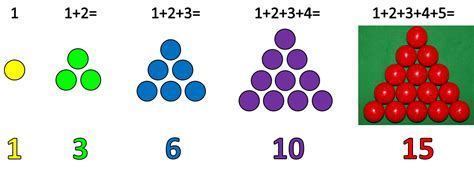
Note: Continuing the series, next is 21, 28 = 7 * 4, 36 = 9 * 4, 46…
Into this Garden of Rationality, walked the beast of irrationality. So quickly, so easily. As long as the Greeks stayed on the straight line of integers and whole numbers, as long as they stayed with the rationals, the division of two numbers , all was fine. But when numbers and geometrical figures were joined, the irrational quickly appeared.
To understand this a bit better, let’s spend a moment with Pythagoras’ famous theory, that we learnt in school geometry. In regards to a right-angled triangle, with sides of length 1, if we “sum the square of the sides”, we will find that the length of the hypotenuse is , which is irrational.
Seeing as we have only just delved into the mysterious and foreboding arena of mathematics, let’s just spend a moment looking at this interesting process.
We know the four operations of addition , subtraction , multiplication , and division . Will any of these produce an irrational number using only integers? The only possibility is through division, interestingly enough. And that is insufficient, for there is a proof that the set of rational numbers using these 4 operations is what is termed a closed system. That is, if we have 2 rational numbers and , whether we add, subtract, multiply and/or divide these two numbers, the result will still be rational. That is if , are rational numbers, then if , where , then will also be rational.
If we start off from the positive integers, 1,2,3…, also known as the natural numbers, the two arithmetical operations that will stay in the realm of these integers are and – which is shorthand for repetitive additions. . This shows that is “commutative”, whether you interpret as five twos or two fives, it is equivalent just as it is for addition. The opposite of as we know is , its shadow. This will introduce the set of negative integers, producing what we call the whole numbers. Yes, even the numbers are not whole without their shadows!
The opposite of multiplication, , introduces us to another whole realm of numbers, called the rational numbers which are comprised of what we term fractions. Every rational number exists between 0 and 1, and between every whole number on the number line.
And there we sit, all is contained, all is calm… We have the realm of harmonies as well as their opposites, the discordant and their harmonics. We have their beats and their children, the half, and quarter beats.
NOTE: This process of division introduces us to an interesting concept, one which is a basic “dynamic” in the formation of all living things. That is, that the elements that form the whole go through some sort of mysterious transformation upon becoming whatever object they form. In that, once they have joined in union with one another, to separate them out into their original elements is often more complex than their creation was.
At this point we have quite a toolbox. We have the integers, the whole numbers, and the rational numbers. Plus our four basic operations: which themselves introduce other “shortcuts” and thus operations, like exponents, roots, etc.
We have also the geometrics: the lines, the triangles, the squares, the cones, the rectangles, and let’s not forget the circle. From the circle we extract a “natural” number — in that it “emerges” naturally from our exploration of the circle. Thus we have pi, , a “natural” number that becomes a pillar of geometry, for who would dare to question the incredible power and harmony of the ? For it is just the ratio of the diameter to the circle! To put the icing on the cake, we find that turns out to be… irrational as well—just as . It seems that many such “naturally” occurring numbers turn out to be irrational.
Why would we even imagine or seek any irrationals in such a wondrous universe of harmonies? Well, it seems, as we have often discovered in mathematics — and in life — that in the game of the universe, there are trails, and once we start on any of these trails, we may find a tiger.
Squaring a number, which is just a simple multiplication number, produces incredible beauty and harmony. One of the easiest and most useful tools we have is the square. Every square has in it two equal triangles. It reflects itself and is easy to work with. It is very useful for working out areas, and balance. Yet, it has a shadow, interestingly enough, called the square root, – which is just the opposite operation of the simple square. It is the road back to the place we began. And that operation leads us out of our closed system of harmonies and into the, G-d forbid, irrational.
If we have a triangle of sides, , then … remember? Thus the length of the hypotenuse is – ‘square root of c’. Taking the simplest case, where , we have , so the length we are seeking is ‘square root of 2’, — a number with an infinite sequence of decimal digits, as far as we can tell. In fact there are proofs that it is indeed irrational.
What is an irrational number – as far as the stodgy mathematicians are concerned anyways? It is a number that cannot be expressed as the ratio of two whole numbers, . In Pythagorean terms, it is something that cannot be expressed in terms of two of God’s natural creations. It is an aberration. Interestingly enough the Jews have no qualms about claiming that their symbols are God’s creations, and as such can express the whole of creation and God’s emanation into said creation.
As such things go, this constraint actually spurred an important advance. These irrational numbers, interestingly enough, also represent a doorway to the infinite. Rational numbers either have a decimal form that is finite, or reduce to a repeating pattern. Irrationals have a decimal expansion that continues all the way to infinity – which is the same as saying that they can never be expressed accurately in this view … or alternatively it would take forever to write them. A Jungian way of expressing this would be that the only way the irrational can be expressed is with the help of the infinite. Somewhere they touch G!d, the infinite being.
This was devastating for those that believed in the integral harmony of the integers mapping the same integral harmony of the universe itself. “God is number” they chanted. This edifice came tumbling down with the discovery of the square root of two. Thus died the idea of the divine harmony of integers to be replaced by the richer idea of the continuum – expressed by geometry,4 which deals with lines, planes and angles – all of which are continuous.
The other concept that flowered during the same period was the concept of infinity. It was time for Zeno’s paradox – which was a layman’s way to demonstrate infinity. From this paradox arose the concept of the limit, using smaller rectangles to calculate the area of large, irregularly shaped areas. Curvature is not easy to measure, so one of the methods, a very successful one, I might add, was to view a curved surface as the sum of a large number of flat surfaces. Eudoxus called this “the method of exhaustion”. He demonstrated that it was sufficient to use quantities as “small as we wish” to compute areas and volumes, and did not need infinitely many, infinitely small quantities. By dividing these quantities as often as we needed, the concept of a potential infinity was introduced.
Although the Greek philosophers and mathematicians discovered much about the concept of infinity, strangely enough for the next two millennia, there was not much more that was gleaned about the mathematics of infinity. The concept emerged during the middle ages in a different context—that of religion. (p24)
Kabbalah
When the King conceived ordaining
He engraved engravings in the lustre on high.
A blinding spark flashed
Within the Concealed of the Concealed
From the mystery of the Infinite,
A cluster of vapour in formlessness,
Set in a ring,
Not white, not black, not red, not green,
No colour at all…
Rabbi Akiva wrote a collection of papers that was called Maaseh Merkava or “The Way of the Chariot”. The rabbi’s writings taught the believers a new way to spirituality. His method consisted of creating visual images of heavenly palaces, whose purpose was to induce meditation and through it closeness to the Divine.
This practice was known to be almost too intense for the human mind. The meditations induced out-of-body experiences, altered mental states, and attained heights of ecstasy previously unknown. While the visions of the heavenly places on the way were vivid and intense, Rabbi Akiva exhorted his students not to succumb to the hallucinations for fear of losing their grip on reality. ‘When you enter the pure stones of marble (a stage of meditation) do not say “Water! Water!” for as the psalm tells us, “He who speaks falsely will not be established in My eyes”’.
The rabbi used biblical passages and chants as vehicles for achieving this meditative state of mind. One of the devices was an infinitely bright light the students visualized, symbolizing the robe which covered G!d when He appeared to Moses on Mount Sinai. These studies took place in extreme secrecy as the intensity of the experiences was considered dangerous for the untrained.
This tradition evolved to become the Kabbalah – or the receiving of the direct transmission of timeless spiritual wisdom. The followers of Kabbalah dedicated themselves to the study of the ancient wisdom of the Torah and commentaries, looking for mysterious connections and hidden truths.
In 1280, a book called the Zohar, meaning radiance—or intense light, the infinite light of G!d. It was written in ancient Aramaic, the lingua franca of the Near East at the dawn of civilisation. It’s roots are steeped in the early tradition of the Kabbalah of Shimon Bar Yochai, a student of Rabbi Akiva. This book was to become perhaps the most important book of Kabbalah, forming one of the foundational pillars of Kabbalah.
With the advent of printing, a number of printed editions appeared in Italy at the end of the 16th century. A hundred years later, the False Messiah, Shabbetai Zevi appeared, drawing much of his imagery from the Zohar, he inspired the Shabbatainist movement of the 17th and 18th centuries. But his conversion to Islam in 1666 proved him to be false. However, his approach prepared the way for messianic cults that arose in Jewish Mysticism for centuries, often gathering many adherents along the way.
Note: Perhaps this movement also gave a lot of impetus to the Hermetic Qabbalah that is to be found in many of the magical societies that arose in the 18th and 19th centuries.
In 13th century Spain, Abraham Abulafia opened the practice of the Kabbalah to women and non-Jews. In the 16th century, the Ari, Isaac Luria, the leader of a secret community of mystics, called the Chaverim, who shared duties, prayers, meals and meditations, introduced a new method of meditation—the Tikkun, or repair. This is a form of deep concentration aimed at binding the world of form to that of the Absolute. He assigned to each of his students a unification exercise suited to the students meditative state, using incense, fragrant herbs and spices, to aid the student in approaching the sublimeness of G!d.
Included in their study turned were numbers. Each letter in the Hebrew alphabet is assigned a numerical value. This study of number and associated meaning was known as the gematria. In the 12th century, French Kabbalists added to this practice meditations based on the Tetragammatron – the four-letter name of G!d, YHVH. These meditations included breathing exercises and bodily gestures.
What are the essential elements of Kabbalah? At the heart of the Kabbalah lie ten “Sephirot” or spheres. Each of the four letters of the Name of G-d represents a world. The ten permutations of the letters form the Sefirot. These, the hidden elements of the Kabbalah, are arranged in a mysterious geometric shape as ten-spheres occupying multidimensional space. Each of the four letters of the Hebrew name of G!d represents a world. The ten permutations of the letters form the Sephirot. The Sephirot may also be viewed as representing the primordial human form, forming a kind of a template. Each one stands for a set of qualities of the Divine. They are ten aspects of G!d and represent guidelines to aspiring to closeness to G!d. But behind the ten Sephirot stands the unknowable entity that is G!d. This entity is so large, so supreme, so beyond description, that it is given the only name possible to describe it: Ein Sof – Without End, i.e., infinity. Thus the statement “God is infinite”. The first Kabbalist to use the name Ein Sof for G!d was the 12th century rabbi, Isaac the Blind. It took a blind man to conceive of the idea of infinite Light.
- Keter meaning: crown. It represents will & humility & 5th dimensional consciousness. Colours: white & black.
- Chochmah meaning: wisdom. It represents egolessness. Colour: blue.
- Binah meaning: understanding. It represents happiness. Colour: green.
- Chesed meaning: mercy or kindness. It is associated with happiness & love. Colour: white.
- Gevurah meaning: might or heroism. It is associated with strength, awe, restraint. Colour: red.
- Tiferet meaning: beauty or elegance. It is associated with compassion. Colour: white.
- Netzach meaning: eternity. It is associated with splendour, victory and security. Colour: red.
- Hod meaning: majesty. It is associated with sincerity. Colour: green.
- Yesod meaning foundation. It represents truth5 and formation. Colour: white.
- Malchut means kingdom. It is associated with action & perception. Colour: white.
With 32 mystical paths of Wisdom
engraved Yah
the Lord of Hosts
the living God
Ruler of the universe
El Shaddai
Merciful and Gracious
High and Exalted
Dwelling in Eternity
Whose name is Holy –
He is lofty and Holy
And He created Her universe
with three books (Sepharim)
with text (Sepher)
with number (Sephar)
and with communication (Sippur).
God, as infinity, cannot be comprehended or described. He, as the _Ein Sof_, is beyond what a human mind can hope to glimpse. Since G!d is Infinity and cannot be comprehended, the Sephirot are (in)finite aspects or faces that the Kabbalists have gleaned from the immensity of the Ein Sof.
Next: Emanations Previous: The Three Trees
Footnotes
It is reminiscent of the story of the Boddhisatva. ↩︎
Kabbalah is reminiscent of that—though admittedly, not as strict. However, it does adhere strictly to a source text, from which have emerged additions, and commentaries, that are used to determine the boundaries of the field in which we are working. With certain protocols of engagement in place, it is possible to keep the flights of fancy and ideas that emerge from the readings, within these constraints. Similar to operations that are restricted to a certain field are closed if all of their results fall within that field. In other words if is a closed field under the operation , then if , then – whatever operation represents. ↩︎
Note: This is based on one of the definitions of infinity. Choose a number as large as you can imagine. Let’s call this number . If for any such number, we can show that there exists a number , then we have an infinite collection. Thus, for any amount of guests in the Infinity Hotel, there will always be room for one more. ↩︎
And calculus. ↩︎
Truth has been generally associated with Tiferet (who is also represented by Jacob). It is also held that the way to balance and harmony is through Truth. Lies and deceptions mess with everyone’s reality, and thus chaos disharmony and dissent. ↩︎