Stage II: Form the basic units
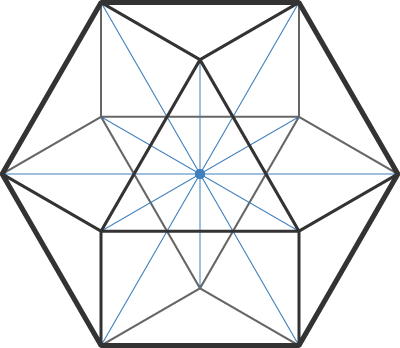
As we build this network of connections, we group the members into cells, or affinity groups (affines), consisting of 10 people. This cell forms the basic unit of the Tree of Life, generally referred to as a leaf node or external node of the tree. All other nodes are called internal nodes, and their purpose is to support the leaf nodes. The people forming this leaf cell must be geographically or physically close. If there are not sufficient people, they may be personally connected through some sort of physical (real, as opposed to virtual) connection. Their sponsor (referred to in point 2 of initial requirements, above) must be a member who personally knows them.
This group will then meet as often as necessary, but not less than twice a month, to discuss any relevant issues or needs and check-in on one another. It is estimated that approximately two hours per week will be sufficient. If there is interest, or research regarding a proposal that you want to present, more time or energy will be needed.
If there is work to be done, and a project is initiated, those that work on it will be compensated. But this would be a different negotiation for a member whose basic needs are being attended to through connection with the network. In other words, food and housing, clothing and all basic needs are provided through the affine that the member is part of, enabling the member to focus on the needs of his community and the greater Tree of Life community as well.
Each member of the group can collaborate with an individual, called his/her shadow, or partner. This member has equal status, but the two will always work in tandem. They can both attend meetings and be as active as they wish, but in the affine meetings, they must speak with one voice. This is in order to reduce the demands of the tree, so that it does not weigh too heavily on one person. If the member is busy or needs a break, their shadow can step in. This rule is designed to keep one’s spouse or partner in the loop, without them being required to fully participate. Thus the actual size of the cell may contain up to 24 people.
However, for clarity, we will refer to the affine as having generally 10 members – which we call “active” members.
The benefits of this format are:
- To ground the tree in the “real” world of people and their concerns.
- To allow for personal ID verification.
- To reduce the amount of extraneous “noise” on the tree.
- To be able to contain erratic behaviour of individuals.