- Introduction
- Chapter 6
- [6:9] Righteous man. [1]](#69-righteous-man-1)
- [6:11-13] Corrupt(ion) (תשׁחת) & Robbery (חָמָס)](#611-13-corruption-תשׁחת--robbery-חָמָס)
- [6:13] Flood because of Robbery](#613-flood-because-of-robbery)
- [6:16] Window on the Ark](#616-window-on-the-ark)
- [6:17] Flood - all will perish[2]](#617-flood---all-will-perish11)
- [6:18] Covenant](#618-covenant)
- [6:19] The Ark was too small](#619-the-ark-was-too-small)
- Chapter 7
- [7:1] Righteous (2x)](#71-righteous-2x)
- [7:2] Clean animals](#72-clean-animals)
- [7:4] Flood - Blot out all beings](#74-flood---blot-out-all-beings)
- [7:6] 600 years old](#76-600-years-old)
- [7:7] Sexual relations](#77-sexual-relations)
- [7:8] Clean beasts](#78-clean-beasts)
- [7:9] Two-by-Two they came](#79-two-by-two-they-came)
- [7:11] Fountains and windows](#711-fountains-and-windows)
- [7:13-15] Gathering into the Ark](#713-15-gathering-into-the-ark)
- [7:16] HaShem closed the Ark.](#716-hashem-closed-the-ark)
- [7:17-24] A description of the flood[3]](#717-24-a-description-of-the-flood24)
- [7:21-23] Flesh expired, not vegetation[4]](#721-23-flesh-expired-not-vegetation25)
- Chapter 8
- [8:1] Spirit (רוח) passes over the waters](#81-spirit-רוח-passes-over-the-waters)
- [8:3-4] Diminished after 150 days](#83-4-diminished-after-150-days)
- [8:7] The Raven](#87-the-raven)
- [8:8-12] The Dove](#88-12-the-dove)
- [8:13-14] Waters dried](#813-14-waters-dried)
- [8:16] Leave the Ark](#816-leave-the-ark)
- [8:20-21] Alter for sacrifice](#820-21-alter-for-sacrifice)
- [8:22] Continuity promised](#822-continuity-promised)
- Chapter 9
- [9:2] Fear you](#92-fear-you)
- [9:3] Meat allowed](#93-meat-allowed)
- [9:4-5] No blood allowed](#94-5-no-blood-allowed)
- [9:8-17] Rainbow[5]](#98-17-rainbow40)
- [9:18-19] Noah's sons[6]](#918-19-noahs-sons41)
- [9:20] Noah: Man of the earth](#920-noah-man-of-the-earth)
- [9:21] Noah drunk](#921-noah-drunk)
- [9:22] Ham saw](#922-ham-saw)
- [9:23] Shem & Japhet did not see](#923-shem--japhet-did-not-see)
- [9:24] Noah awoke](#924-noah-awoke)
- [9:25-27] Curses Ham](#925-27-curses-ham)
- Chapter 10: The seventy nations
- [10:5] Separated into nations](#105-separated-into-nations)
- [10:9] Nimrod](#109-nimrod)
- [10:31-32] According to their ...](#1031-32-according-to-their-)
- Chapter 11: Babel
- [11:5] G-d descends](#115-g-d-descends)
- [11:7] Let us descend](#117-let-us-descend)
- [11:26-27] Terach, father of Abram](#1126-27-terach-father-of-abram)
- [11:29] Terach, father of Abram](#1129-terach-father-of-abram)
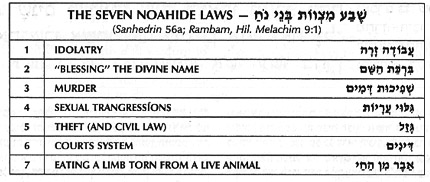
- The Seven Noahide Laws
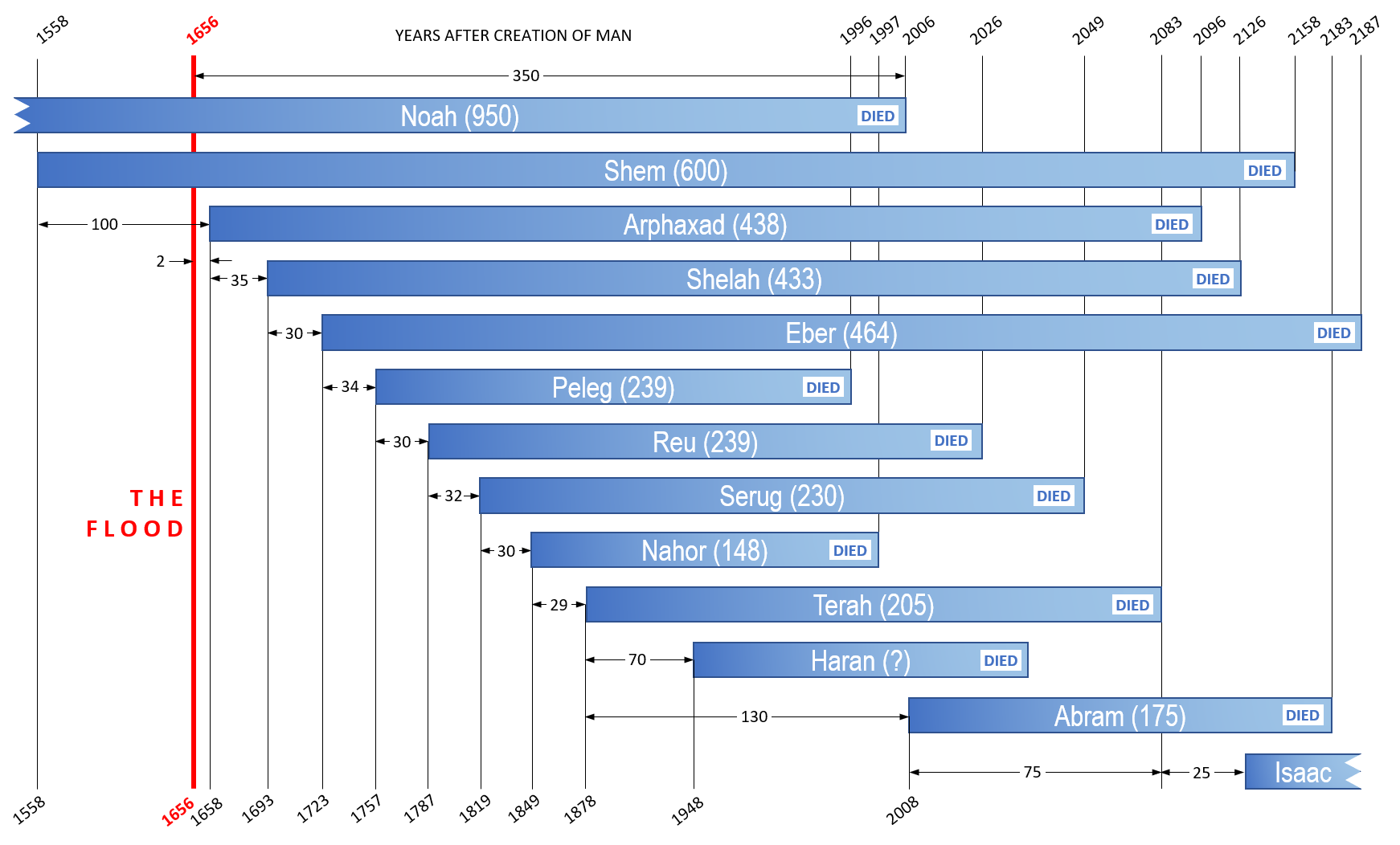
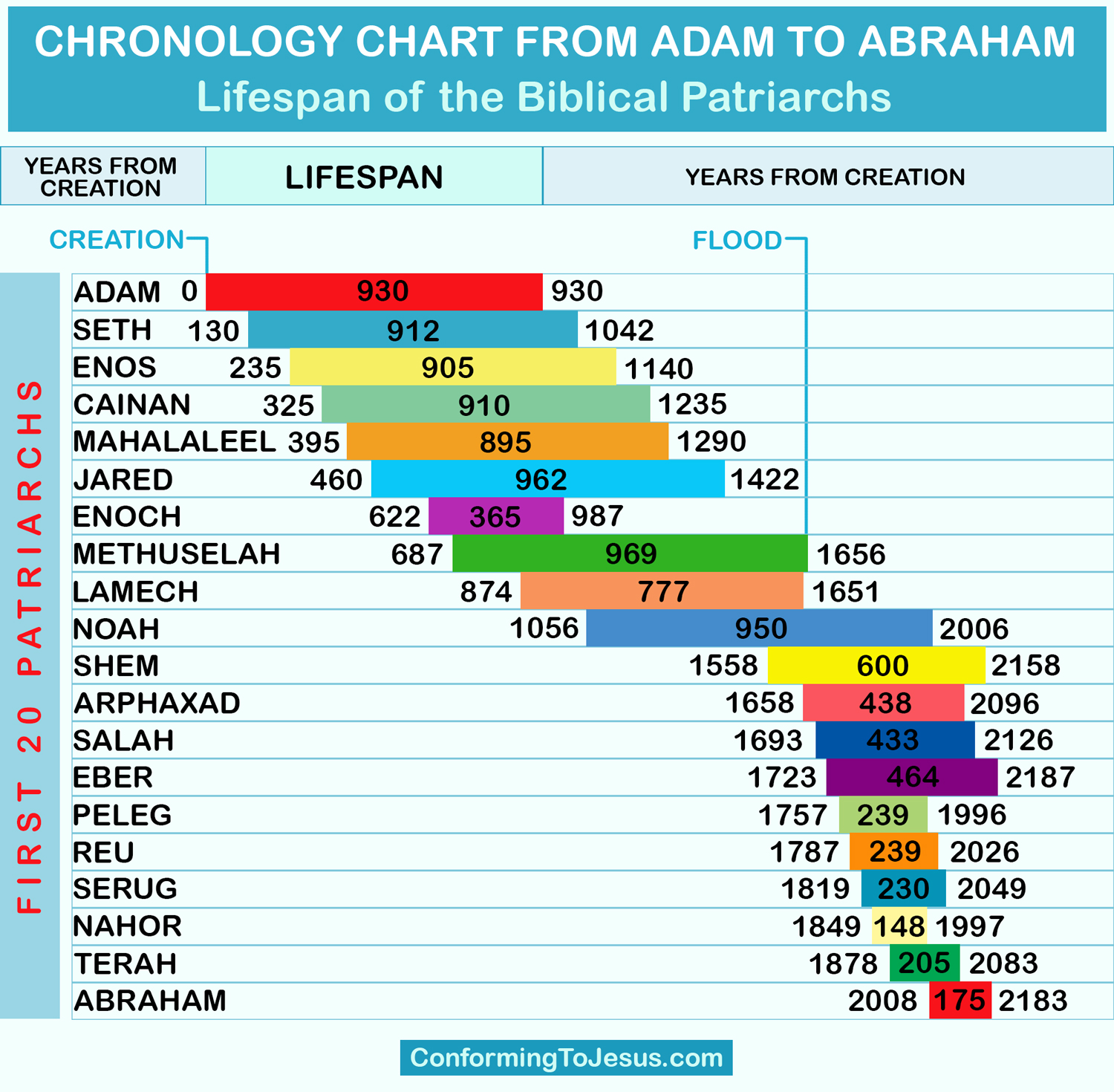
- Chronology/Time Lines
Introduction
In the second, Noah, who is righteous, upon emerging from the flood sins by getting drunk and exposing his nakedness. He too was expelled, though in this case the "garden" was removed from him previously — by the flood. Imagine everyone on the planet getting annihilated, and you were the only person (you knew) who survived. Everything that had come before, all your friends, the society that evolved around you, everything had been denuded and you had to begin again alone (with only your family — which at that point consisted of your wife (who is never mentioned, and your sons (three of them) and their wives.) That is the "garden" to which I refer.
Chapter 6
6:9] Righteous man. [1:1]
ט אֵ֚לֶּה תּֽוֹלְדֹ֣ת נֹ֔חַ נֹ֗חַ אִ֥ישׁ צַדִּ֛יק תָּמִ֥ים הָיָ֖ה בְּדֹֽרֹתָ֑יו אֶת־הָֽאֱלֹהִ֖ים הִתְהַלֶּךְ־נֹֽחַ:9. These are the generations of Noah, Noah was a righteous man he was perfect in his generations; Noah walked with God.
n6:9] נֹ֗חַ אִ֥ישׁ צַדִּ֛יק — Noah was a righteous man. The primary "offspring" of the righteous are they good deeds, for the worthwhile things that a person does are his prime legacy. (Rashi) A person should work hard to perfect his deeds, just as he spares no effort to help his children (R' Moshe Feinstein)
בְּדֹֽרֹתָ֑יו — In his generations. There are two ways to look at this statement. The first is that it is in praise of Noah, who was righteous even while his generation was corrupt.[7] How much more righteous would he have been had he been surrounded by righteous people.[8]
The second is more critical of him, claiming that he was righteous only in his generation, by comparison to his wicked brothers (Rashi). Accordingly, the righteous of each generation are judged in terms of their own time (Sefer HaParshiyot).
6:11-13] Corrupt(ion) (תשׁחת) & Robbery (חָמָס)
יא וַתִּשָּׁחֵ֥ת הָאָ֖רֶץ לִפְנֵ֣י הָֽאֱלֹהִ֑ים וַתִּמָּלֵ֥א הָאָ֖רֶץ חָמָֽס: יב וַיַּ֧רְא אֱלֹהִ֛ים אֶת־הָאָ֖רֶץ וְהִנֵּ֣ה נִשְׁחָ֑תָה כִּֽי־הִשְׁחִ֧ית כָּל־בָּשָׂ֛ר אֶת־דַּרְכּ֖וֹ עַל־הָאָֽרֶץ: יג וַיֹּ֨אמֶר אֱלֹהִ֜ים לְנֹ֗חַ קֵ֤ץ כָּל־בָּשָׂר֙ בָּ֣א לְפָנַ֔י כִּי־מָֽלְאָ֥ה הָאָ֛רֶץ חָמָ֖ס מִפְּנֵיהֶ֑ם וְהִנְנִ֥י מַשְׁחִיתָ֖ם אֶת־הָאָֽרֶץ:11. Now the earth was corrupt before God, and the earth became full of robbery. 12. And God saw the earth, and behold it had become corrupted, for all flesh had corrupted its way on the earth. 13. And God said to Noah, "The end of all flesh has come before Me, for the earth has become full of robbery because of them, and behold I am destroying them from the earth.
n6:11-12] The behaviour of the people had deteriorated. At first they were corrupt — being guilty of immorality and idolatry. They sinned covertly (before G-d). Later, the earth had become filled with robbery. This robbery was obvious to all.[9]
Then the entire earth was corrupted, because Man is the essence of the world, and his corruption infects all of Creation (Zohar). Such is the progression of sin. It begins in private, when people still have a sense of right and wrong. But once people develop the habit of sinning, they gradually lose their shame, and immoral behaviour becomes accepted — even the required — norm.[10]
The Midrash teaches that they stole from one another in petty ways that were not subject to the authority of the courts.[11] Though this is not the gravest kind of sin, it is morally damaging in the extreme, because thievery within the letter of the law weakens the conscience and corrupts the fabric[12] (R. Hirsch).
6:13] Flood because of Robbery
יג וַיֹּ֨אמֶר אֱלֹהִ֜ים לְנֹ֗חַ קֵ֤ץ כָּל־בָּשָׂר֙ בָּ֣א לְפָנַ֔י כִּי־מָֽלְאָ֥ה הָאָ֛רֶץ חָמָ֖ס מִפְּנֵיהֶ֑ם וְהִנְנִ֥י מַשְׁחִיתָ֖ם אֶת־הָאָֽרֶץ:13. And God said to Noah, "The end of all flesh has come before Me, for the earth has become full of robbery [^8] because of them, and behold I am destroying them from the earth.
טווְזֶ֕ה אֲשֶׁ֥ר תַּֽעֲשֶׂ֖ה אֹתָ֑הּ שְׁל֧שׁ מֵא֣וֹת אַמָּ֗ה אֹ֚רֶךְ הַתֵּבָ֔ה חֲמִשִּׁ֤ים אַמָּה֙ רָחְבָּ֔הּ וּשְׁלשִׁ֥ים אַמָּ֖ה קֽוֹמָתָֽהּ:15. And this [is the size] you shall make it: three hundred cubits the length of the ark, fifty cubits its breadth, and thirty cubits its height.
n6:15] Cubit.[13] According the to smallest estimate of 18 inches per cubit, the dimensions of the Art were 450 x 75 x 45 feet = 1,518,750 cubic feet. Each of its three stories had 33,750 sq. feet of floor space for a total of 101,250 sq. feet.
6:16] Window on the Ark
טז צֹ֣הַר תַּֽעֲשֶׂ֣ה לַתֵּבָ֗ה וְאֶל־אַמָּה֙ תְּכַלֶּ֣נָּה מִלְמַ֔עְלָה וּפֶ֥תַח הַתֵּבָ֖ה בְּצִדָּ֣הּ תָּשִׂ֑ים תַּחְתִּיִּ֛ם שְׁנִיִּ֥ם וּשְׁלִשִׁ֖ים תַּֽעֲשֶֽׂהָ:16. You shall make a skylight for the ark, and to a cubit you shall finish it to the top, and the entrance of the ark you shall place in its side; you shall make it with bottom [compartments], second story [compartments], and third story [compartments].
n6:16] צֹ֣הַר — A window. Some say it was a skylight— most say it was a window, and some say it was a precious stone that refracted the outside light to illuminate the interior.[14] (Chizkuni)
6:17] Flood - all will perish[2:1]
יז וַֽאֲנִ֗י הִֽנְנִי֩ מֵבִ֨יא אֶת־הַמַּבּ֥וּל מַ֨יִם֙ עַל־הָאָ֔רֶץ לְשַׁחֵ֣ת כָּל־בָּשָׂ֗ר אֲשֶׁר־בּוֹ֙ ר֣וּחַ חַיִּ֔ים מִתַּ֖חַת הַשָּׁמָ֑יִם כֹּ֥ל אֲשֶׁר־בָּאָ֖רֶץ יִגְוָֽע:17. And I, behold I am bringing the flood, water upon the earth, to destroy all flesh in which there is the spirit of life, from beneath the heavens; all that is upon the earth will perish.
6:18] Covenant
יח וַֽהֲקִֽמֹתִ֥י אֶת־בְּרִיתִ֖י אִתָּ֑ךְ וּבָאתָ֙ אֶל־הַתֵּ֔בָה אַתָּ֕ה וּבָנֶי֛ךָ וְאִשְׁתְּךָ֥ וּנְשֵֽׁי־בָנֶי֖ךָ אִתָּֽךְ:
18. And I will set up My covenant with you, and you shall enter the ark, you and your sons, and your wife and your sons' wives with you.
n6:18] וַֽהֲקִֽמֹתִ֥י אֶת־בְּרִיתִ֖י — I will set up My covenant with you.[15]
6:19] The Ark was too small
יט וּמִכָּל־הָ֠חַ֠י מִכָּל־בָּשָׂ֞ר שְׁנַ֧יִם מִכֹּ֛ל תָּבִ֥יא אֶל־הַתֵּבָ֖ה לְהַֽחֲיֹ֣ת אִתָּ֑ךְ זָכָ֥ר וּנְקֵבָ֖ה יִֽהְיֽוּ:19. And of all living things of all flesh, two of each you shall bring into the ark to preserve alive with you; they shall be male and female.[^13]
Chapter 7
7:1] Righteous (2x)
א וַיֹּ֤אמֶר יְהֹוָה֙ לְנֹ֔חַ בֹּֽא־אַתָּ֥ה וְכָל־בֵּֽיתְךָ֖ אֶל־הַתֵּבָ֑ה כִּי־אֹֽתְךָ֥ רָאִ֛יתִי צַדִּ֥יק לְפָנַ֖י בַּדּ֥וֹר הַזֶּֽה:1. And the Lord said to Noah, "Come into the ark, you and all your household, for it is you that I have seen as a righteous man before Me in this generation.[^14]
n1-10] Up to now, the Sidrah has spoken of Elohim, indicating G-d's Attribute of Justice. Here he is called HaShem, the G-d of Mercy. Sforno thinks that this is because He is saving Noah from the flood, which they did not deserve.
7:2] Clean animals
ב מִכֹּ֣ל | הַבְּהֵמָ֣ה הַטְּהוֹרָ֗ה תִּקַּח־לְךָ֛ שִׁבְעָ֥ה שִׁבְעָ֖ה אִ֣ישׁ וְאִשְׁתּ֑וֹ וּמִן־הַבְּהֵמָ֡ה אֲ֠שֶׁ֠ר לֹ֣א טְהֹרָ֥ה הִ֛וא שְׁנַ֖יִם אִ֥ישׁ וְאִשְׁתּֽוֹ:2O. Of all the clean animals you shall take for yourself seven pairs, a male and its mate, and of the animals that are not clean, two, a male and its mate.[^15]
7:4] Flood - Blot out all beings
ד כִּי֩ לְיָמִ֨ים ע֜וֹד שִׁבְעָ֗ה אָֽנֹכִי֙ מַמְטִ֣יר עַל־הָאָ֔רֶץ אַרְבָּעִ֣ים י֔וֹם וְאַרְבָּעִ֖ים לָ֑יְלָה וּמָחִ֗יתִי אֶת־כָּל־הַיְקוּם֙ אֲשֶׁ֣ר עָשִׂ֔יתִי מֵעַ֖ל פְּנֵ֥י הָֽאֲדָמָֽה:4.For in another seven days, I will make it rain upon the earth for forty days and forty nights, and I will blot out all beings that I have made, off the face of the earth."[^16]
7:6] 600 years old
ווְנֹ֕חַ בֶּן־שֵׁ֥שׁ מֵא֖וֹת שָׁנָ֑ה וְהַמַּבּ֣וּל הָיָ֔ה מַ֖יִם עַל־הָאָֽרֶץ:6. And Noah was six hundred years old, and the flood came about, water upon the earth.[^17]
7:7] Sexual relations
ז וַיָּבֹ֣א נֹ֔חַ וּ֠בָנָ֠יו וְאִשְׁתּ֧וֹ וּנְשֵֽׁי־בָנָ֛יו אִתּ֖וֹ אֶל־הַתֵּבָ֑ה מִפְּנֵ֖י מֵ֥י הַמַּבּֽוּל:7. And Noah with his sons, his wife and his sons' wives with him went into the ark because of the flood waters.
n7:7] נֹ֔חַ וּ֠בָנָ֠יו — Noah and his sons. The men and women are listed separately because marital intimacy was forbidden at a time when the whole world was steeped in pain (Rashi).[16]
מִפְּנֵ֖י מֵ֥י הַמַּבּֽוּל — Because of the waters of the flood.The implication being Noah, too, was of those who had little faith, believing and not believing that the Flood would come, and he did not enter the ark until the waters forced him to do so. — [Gen. Rabbah 32:6](Rashi)... Man should not allow his calculations to stand in the way of his compliance with G-d's command (Me'am Loez).[17]
7:8] Clean beasts
ח מִן־הַבְּהֵמָה֙ הַטְּהוֹרָ֔ה וּמִ֨ן־הַבְּהֵמָ֔ה אֲשֶׁ֥ר אֵינֶ֖נָּה טְהֹרָ֑ה וּמִ֨ן־הָע֔וֹף וְכֹ֥ל אֲשֶׁר־רֹמֵ֖שׂ עַל־8O. Of the clean beasts and of the beasts that are not clean, and of the fowl, and all that creeps upon the earth.
n7:8] אֲשֶׁ֥ר אֵינֶ֖נָּה טְהֹרָ֑ה — That is not clean. By using this long expression instead of the single word הַטְמֵאָה, unclean, the Torah teaches a moral lesson: One should never utter a gross expression, for the Torah, which stresses brevity, added several letters to the Hebrew text of our verse to avoid using the unseemly expression unclean (Pesachim 3a).
7:9] Two-by-Two they came
ט שְׁנַ֨יִם שְׁנַ֜יִם בָּ֧אוּ אֶל־נֹ֛חַ אֶל־הַתֵּבָ֖ה זָכָ֣ר וּנְקֵבָ֑ה כַּֽאֲשֶׁ֛ר צִוָּ֥ה אֱלֹהִ֖ים אֶת־נֹֽחַ:9. Two by two they came to Noah to the ark, male and female, as God had commanded Noah.
n7:9] The unclean animals came to the Ark of their own free will, whereas the clean animals Noah had to go seek out. For G-d to have sent those animals to Noah without any effort on his part would have diminished the significance of his offerings. A person's free-willed offering is an expression of his gratitude or an effort to increase his closeness to ... G-d.[18] It is his own desire and his own exertions that give value to his offering.[19]
7:11] Fountains and windows
יא בִּשְׁנַ֨ת שֵֽׁשׁ־מֵא֤וֹת שָׁנָה֙ לְחַיֵּי־נֹ֔חַ בַּחֹ֨דֶשׁ֙ הַשֵּׁנִ֔י בְּשִׁבְעָֽה־עָשָׂ֥ר י֖וֹם לַחֹ֑דֶשׁ בַּיּ֣וֹם הַזֶּ֗ה נִבְקְעוּ֙ כָּל־מַעְיְנוֹת֙ תְּה֣וֹם רַבָּ֔ה וַֽאֲרֻבֹּ֥ת הַשָּׁמַ֖יִם נִפְתָּֽחוּ11. In the six hundredth year of Noah's life, in the second month, on the seventeenth day of the month, on this day, all the fountains of the great deep were split,[^21] and the windows of the heavens opened up.
n7:11] וַֽאֲרֻבֹּ֥ת הַשָּׁמַ֖יִם — split the fountains of the great deep and the windows of heaven opened up.
7:13-15] Gathering into the Ark
טו וַיָּבֹ֥אוּ אֶל־נֹ֖חַ אֶל־הַתֵּבָ֑ה שְׁנַ֤יִם שְׁנַ֨יִם֙ מִכָּל־הַבָּשָׂ֔ר אֲשֶׁר־בּ֖וֹ ר֥וּחַ חַיִּֽים:15. And they came to Noah to the ark, two by two of all flesh in which there is the spirit of life.[^22]
n7:15] Here we find Man in his loftiest state, for the entire world comes to Noah. (R' Hirsch). The verse stresses that they came in matched pairs, and not one species was missing — which was a miracle! (Ibn Caspi)... Such precision what have been impossible by natural (non-Divine) means. (R' Bachya)
7:16] HaShem closed the Ark.
טז וְהַבָּאִ֗ים זָכָ֨ר וּנְקֵבָ֤ה מִכָּל־בָּשָׂר֙ בָּ֔אוּ כַּֽאֲשֶׁ֛ר צִוָּ֥ה אֹת֖וֹ אֱלֹהִ֑ים וַיִּסְגֹּ֥ר יְהֹוָ֖ה בַּֽעֲדֽוֹ:16. And those who came male and female of all flesh came, as God had commanded him, and the Lord shut it on his behalf.[^23]
n7:16] וַיִּסְגֹּ֥ר יְהֹוָ֖ה בַּֽעֲדֽוֹ — The door was shut by the Lord for him.
7:17-24] A description of the flood[3:1]
7:21-23] Flesh expired, not vegetation[4:1]
Chapter 8
8:1] Spirit (רוח) passes over the waters
א וַיִּזְכֹּ֤ר אֱלֹהִים֙ אֶת־נֹ֔חַ וְאֵ֤ת כָּל־הַֽחַיָּה֙ וְאֶת־כָּל־הַבְּהֵמָ֔ה אֲשֶׁ֥ר אִתּ֖וֹ בַּתֵּבָ֑ה וַיַּֽעֲבֵ֨ר אֱלֹהִ֥ים ר֨וּחַ֙ עַל־הָאָ֔רֶץ וַיָּשֹׁ֖כּוּ הַמָּֽיִם: ב וַיִּסָּֽכְרוּ֙ מַעְיְנֹ֣ת תְּה֔וֹם וַֽאֲרֻבֹּ֖ת הַשָּׁמָ֑יִם וַיִּכָּלֵ֥א הַגֶּ֖שֶׁם מִן־הַשָּׁמָֽיִם:1. And God remembered Noah and all the beasts and all the cattle that were with him in the ark, and God caused a spirit to pass over the earth, and the waters subsided. 2. And the springs of the deep were closed, and the windows of the heavens, and the rain from the heavens was withheld.
n8:1] וַיִּזְכֹּ֤ר אֱלֹהִים֙ — G-d remembered. To say G-d "remembers" implies that forgetfulness, {or lack of awareness,} is possible for Him, which is clearly an absurdity... Noah earned this mercy because he fed and cared for the animals during all the months in the Ark (Midrash).[20]
ר֨וּחַ֙ — A spirit.[21] This spirit or wind caused the waters to stop their seething, boiling fury and (v8:2) sealed the sources of the waters so that they could begin to recede.[22]
8:3-4] Diminished after 150 days
גוַיָּשֻׁ֧בוּ הַמַּ֛יִם מֵעַ֥ל הָאָ֖רֶץ הָל֣וֹךְ וָשׁ֑וֹב וַיַּחְסְר֣וּ הַמַּ֔יִם מִקְצֵ֕ה חֲמִשִּׁ֥ים וּמְאַ֖ת יֽוֹם:3. And the waters receded off the earth more and more, and the water diminished at the end of a hundred and fifty days.
n3-6] On the first of Sivan — the seventh month and 150 days from 27 Kislev when the rain ended — the water began to recede, and on the 17th of Sivan, the bottom of the Ark rested on the mountains of Ararat. It was not until the 10th month from the beginning of the rain that the mountaintops became visible. Forty days after that, Noah opened the window of the Ark.[23]
8:7] The Raven
זוַיְשַׁלַּ֖ח אֶת־הָֽעֹרֵ֑ב וַיֵּצֵ֤א יָצוֹא֙ וָשׁ֔וֹב עַד־יְב֥שֶׁת הַמַּ֖יִם מֵעַ֥ל הָאָֽרֶץ:7. And he sent forth the raven, and it went out, back and forth until the waters dried up off the earth.[^30]
8:8-12] The Dove
ח וַיְשַׁלַּ֥ח אֶת־הַיּוֹנָ֖ה מֵֽאִתּ֑וֹ לִרְאוֹת֙ הֲקַ֣לּוּ הַמַּ֔יִם מֵעַ֖ל פְּנֵ֥י הָֽאֲדָמָֽה: ט וְלֹא־מָֽצְאָה֩ הַיּוֹנָ֨ה מָנ֜וֹחַ לְכַף־רַגְלָ֗הּ וַתָּ֤שָׁב אֵלָיו֙ אֶל־הַתֵּבָ֔ה כִּי־מַ֖יִם עַל־פְּנֵ֣י כָל־הָאָ֑רֶץ וַיִּשְׁלַ֤ח יָדוֹ֙ וַיִּקָּחֶ֔הָ וַיָּבֵ֥א אֹתָ֛הּ אֵלָ֖יו אֶל־הַתֵּבָֽה: י וַיָּ֣חֶל ע֔וֹד שִׁבְעַ֥ת יָמִ֖ים אֲחֵרִ֑ים וַיֹּ֛סֶף שַׁלַּ֥ח אֶת־הַיּוֹנָ֖ה מִן־הַתֵּבָֽה: יא וַתָּבֹ֨א אֵלָ֤יו הַיּוֹנָה֙ לְעֵ֣ת עֶ֔רֶב וְהִנֵּ֥ה עֲלֵה־זַ֖יִת טָרָ֣ף בְּפִ֑יהָ וַיֵּ֣דַע נֹ֔חַ כִּי־קַ֥לּוּ הַמַּ֖יִם מֵעַ֥ל הָאָֽרֶץ: יב וַיִּיָּ֣חֶל ע֔וֹד שִׁבְעַ֥ת יָמִ֖ים אֲחֵרִ֑ים וַיְשַׁלַּח֙ אֶת־הַיּוֹנָ֔ה וְלֹא־יָֽסְפָ֥ה שֽׁוּב־אֵלָ֖יו עֽוֹד:8. And he sent forth the dove from with him, to see whether the waters had abated from upon the surface of the earth. 9. But the dove found no resting place for the sole of its foot; so it returned to him to the ark because there was water upon the entire surface of the earth; so he stretched forth his hand and took it, and he brought it to him to the ark. 10. And he waited again another seven days, and he again sent forth the dove from the ark. 11. And the dove returned to him at eventide, and behold it had plucked an olive leaf in its mouth; so Noah knew that the water had abated from upon the earth. 12. And he again waited another seven days, and he sent forth the dove, and it no longer continued to return to him.[^31]
n8:11] וַתָּבֹ֨א אֵלָ֤יו הַיּוֹנָה֙ — The dove came back to him. The Torah implies that the dove came back to Noah in fulfillment of its mission to bring back a sign of G-d's response (Haamek Davar). By bringing back an olive leaf, the was saying symbolically, "Better that my food be bitter but from G-d's hand, than sweet as honey but dependent on mortal Man" (Rashi). R' Hirsch elaborates: For a full year the dove could not find its own food to eat; hunger forced it to rely on Noah's kindness. The it found a bitter leaf that it would ordinarily not eat — and carried it back to Noah. The lesson that the Sages teach from this is that even the bitterest food eaten in freedom is better than the sweetest food given in servitude.
8:13-14] Waters dried
n8:14] From 17th Marchesvan, when the rains began, to the 27th Marchesvan of the following year, when Noah was finally able to leave the Ark, was a full solar year, making 365 days that the earth was inhabitable.[24]
8:16] Leave the Ark
טזצֵ֖א מִן־הַתֵּבָ֑ה אַתָּ֕ה וְאִשְׁתְּךָ֛ וּבָנֶ֥יךָ וּנְשֵֽׁי־בָנֶ֖יךָ אִתָּֽךְ:16 Go out of the ark, you and your wife, and your sons, and your sons' wives with you.
n16] The command to leave the Ark. In telling Noah to leave the Ark, G-d uses the name Elohim, and uses it throughout the narrative. In addition to its familiar connotation of G-d as Judge, it also refers to Him as G-d Who dominates nature and uses it to carry out His ends. Just as judgement proceeds accordingly to clearly defined rules, so too nature has clearly defined laws, within which G-d guides the world. The Name Elohim refers to this aspect of G-d's total mastery, for it describes Him as "the Mighty One Who wields authority over the beings above and below" (Tur Orach Chaim 5) and the בעל היכולת, the Omnipotent One (Shulchan Aruch, ibid). Note that the numerical value of Elohim equals that of הטבע, the nature, indicating that He controls all natural phenomenon.[25]
8:20-21] Alter for sacrifice
כ וַיִּ֥בֶן נֹ֛חַ מִזְבֵּ֖חַ לַֽיהֹוָ֑ה וַיִּקַּ֞ח מִכֹּ֣ל הַבְּהֵמָ֣ה הַטְּהֹרָ֗ה וּמִכֹּל֙ הָע֣וֹף הַטָּה֔וֹר וַיַּ֥עַל עֹלֹ֖ת בַּמִּזְבֵּֽחַ: כא וַיָּ֣רַח יְהֹוָה֘ אֶת־רֵ֣יחַ הַנִּיחֹ֒חַ֒ וַיֹּ֨אמֶר יְהֹוָ֜ה אֶל־לִבּ֗וֹ לֹ֣א אֹ֠סִ֠ף לְקַלֵּ֨ל ע֤וֹד אֶת־הָֽאֲדָמָה֙ בַּֽעֲב֣וּר הָֽאָדָ֔ם כִּ֠י יֵ֣צֶר לֵ֧ב הָֽאָדָ֛ם רַ֖ע מִנְּעֻרָ֑יו וְלֹֽא־אֹסִ֥ף ע֛וֹד לְהַכּ֥וֹת אֶת־כָּל־חַ֖י כַּֽאֲשֶׁ֥ר עָשִֽׂיתִי:21. And the Lord smelled the pleasant aroma, and the Lord said to Himself, "I will no longer curse the earth because of man, for the imagination of man's heart is evil from his youth, and I will no longer smite all living things as I have done. 20. And Noah built an altar to the Lord, and he took of all the clean animals and of all the clean fowl and brought up burnt offerings on the altar.
n8:20] Noah brings an offering. In connection with the sacrifices, G-d is always called HaShem, the Name signifying the attribute of Mercy. This shows that offering are always directed toward the Merciful G-d Who desires life, not death and suffering. The purpose of the sacrificial service is to bring about a person's closeness and dedication to G-dliness. The non-Jewish, blasphemous view of sacrifices as an appeasment of a "vengeful God of nature.
n8:21] רַ֖ע מִנְּעֻרָ֑יו — Is evil from his youth.[26] Man receives the evil inclination from birth before he has the wisdom and maturity to combat it. [Meaning that man's animal instincts are inborn, while the intelect and spiritual desire for self-improvement must be inculcated and developed with time and maturity].
8:22] Continuity promised
Chapter 9
9:2] Fear you
ב וּמוֹרַֽאֲכֶ֤ם וְחִתְּכֶם֙ יִֽהְיֶ֔ה עַ֚ל כָּל־חַיַּ֣ת הָאָ֔רֶץ וְעַ֖ל כָּל־ע֣וֹף הַשָּׁמָ֑יִם בְּכֹל֩ אֲשֶׁ֨ר תִּרְמֹ֧שׂ הָֽאֲדָמָ֛ה וּבְכָל־דְּגֵ֥י הַיָּ֖ם בְּיֶדְכֶ֥ם נִתָּֽנוּ:2. And your fear and your dread shall be upon all the beasts of the earth and upon all the fowl of the heaven; upon everything that creeps upon the ground and upon all the fish of the sea, [for] they have been given into your hand[s].
n9:2] וּמוֹרַֽאֲכֶ֤ם — The fear of you. Lest Noah be afraid that the few surviving people would be in constant danger from the hordes of animals in the world, G-d ... had implanted in animals and instinctive fear of human beings (Arbabanel).[27]
9:3] Meat allowed
גכָּל־רֶ֨מֶשׂ֙ אֲשֶׁ֣ר הוּא־חַ֔י לָכֶ֥ם יִֽהְיֶ֖ה לְאָכְלָ֑ה כְּיֶ֣רֶק עֵ֔שֶׂב נָתַ֥תִּי לָכֶ֖ם אֶת־כֹּֽל:3. Every moving thing that lives shall be yours to eat; like the green vegetation, I have given you everything.[^36]
9:4-5] No blood allowed
דאַךְ־בָּשָׂ֕ר בְּנַפְשׁ֥וֹ דָמ֖וֹ לֹ֥א תֹאכֵֽלוּ: הוְאַ֨ךְ אֶת־דִּמְכֶ֤ם לְנַפְשֹֽׁתֵיכֶם֙ אֶדְר֔שׁ מִיַּ֥ד כָּל־חַיָּ֖ה אֶדְרְשֶׁ֑נּוּ וּמִיַּ֣ד הָֽאָדָ֗ם מִיַּד֙ אִ֣ישׁ אָחִ֔יו אֶדְר֖שׁ אֶת־נֶ֥פֶשׁ הָֽאָדָֽם:4. But, flesh with its soul, its blood, you shall not eat. 5. But your blood, of your souls, I will demand [an account]; from the hand of every beast I will demand it, and from the hand of man, from the hand of each man, his brother, I will demand the soul of man.[^39]
9:8-17] Rainbow[5:1]
n9:8-17] That the rainbow is a phenomenon that is predictable and explainable in natural terms is no contradiction to its status as a Divinely ordained sign. God utilized the natural phenomena of His world as reminders of His covenant, for the very laws of nature should recall to thinking people that there is a G-d of nature.
9:18-19] Noah's sons[6:1]
9:20] Noah: Man of the earth
כוַיָּ֥חֶל נֹ֖חַ אִ֣ישׁ הָֽאֲדָמָ֑ה וַיִּטַּ֖ע כָּֽרֶם:20. And Noah began to be a master of the soil, and he planted a vineyard.
n9:20] אִ֣ישׁ הָֽאֲדָמָ֑ה — Man of the Earth[28]
9:21] Noah drunk
כאוַיֵּ֥שְׁתְּ מִן־הַיַּ֖יִן וַיִּשְׁכָּ֑ר וַיִּתְגַּ֖ל בְּת֥וֹךְ אָֽהֳלֹֽה:21. And he drank of the wine and became drunk, and he uncovered himself within his tent.[^43]
9:22] Ham saw
כב וַיַּ֗רְא חָ֚ם אֲבִ֣י כְנַ֔עַן אֵ֖ת עֶרְוַ֣ת אָבִ֑יו וַיַּגֵּ֥ד לִשְׁנֵֽי־אֶחָ֖יו בַּחֽוּץ:22. And Ham, the father of Canaan, saw his father's nakedness, and he told his two brothers outside.
n9:22] וַיַּ֗רְא חָ֚ם אֲבִ֣י כְנַ֔עַן — Ham, the father of Canaan, saw.[29] Basically his behaviour was disgraceful, for he entered the tent, and leered at Noah's debasement, then, instead of averting his gaze and covering him, he went derisively to tell his brothers.