In Brief
The name of the Parshah, “Behaalotecha”, means “When you raise”.
Aaron is commanded to raise light in the lamps of the menorah, and the tribe of Levi is initiated into the service in the Sanctuary.
A “Second Passover” is instituted in response to the petition “Why should we be deprived?” by a group of Jews who were unable to bring the Passover offering in its appointed time because they were ritually impure. G‑d instructs Moses on the procedures for Israel’s journeys and encampments in the desert, and the people journey in formation from Mount Sinai, where they had been camped for nearly a year.
The people are dissatisfied with their “bread from heaven” (the manna), and demand that Moses supply them with meat. Moses appoints 70 elders, to whom he imparts of his spirit, to assist him in the burden of governing the people. Miriam speaks negatively of Moses, and is punished with “leprosy”; Moses prays for her healing, and the entire community waits seven days for her recovery.
Contents
Ch 8:
Menorah (v8:1-4)
Levites (v8:5-26)
-
Menorah
8:2] Face of the Menorah
When you raise light in the lamps . . . אל־מול פני המנִורה towards the face of the Menorah
Q: How is the מנורה fashioned so the the seven lamps cast light towards it’s face? Or even “from the face” of the lamp. How was the light of the wicks directed toward the centre, taking into account the manner in which the Menora is constructed, according to all the depictions, and Menorot around? Because the first image we have of the Menorah is from a Roman victory arch. How was the light of the wicks directed toward the centre, How was it constructed so that it’s light did not spread out?
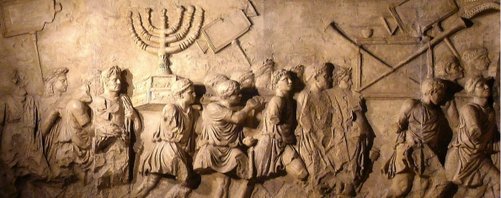
As explained in Exodus 25:37, the three wicks on the right and the three wicks on the left were all directed to the Menora’s middle stem, thus concentrating the light toward the centre.
According to v8:4, it is like a flower:
מַעֲשֵׂ֤ה הַמְּנֹרָה֙ מִקְשָׁ֣ה זָהָ֔ב עַד־יְרֵכָ֥הּ עַד־פִּרְחָ֖הּ
N: One proposal was that it was actually lasers. However, it might have been constructed with some sort of shielding, or reflecting material around the wicks - though this has never been mentioned.
The “right” symbolises those who engage in spiritual pursuits, while the “left” signifies temporal activity. By having both sides give light toward the centre, the Torah teaches that all of man’s activities should be directed toward the service of G-d.
—(Sforno)
N: I understand his line to the service of G-d, but to me it seems that the conclusion would be “By having both sides give light toward the centre, the Torah teaches that all of man’s activities should be directed toward the centre.” What is the Centre? It is that infinite point around which all the other pertinent forces—in this case, the lights of the Menora—extend. The centre also represents the origin, or source, of the circle, i.e., G-d.
The spiritual significance of the mitzvah of lighting the menorah is that one should be a “lamplighter” who ignites that latent potential within “the soul of man, a lamp of G-d” (Proverbs 20:27).
The endeavour is to kindle the lamp “so that a flame arises of its own accord.” The objective would be to establish him or her as a self-sufficient luminary, a soul whose light shines for and upon us all. The best way to do this is through influencing one’s fellow, assisting in developing his talents and abilities so that his lamp independently glows and, in turn, kindles the potential in others.
—(from The Lubavitcher Rabbi)
When the Kohen came to kindle the Menorah’s lamps each afternoon in the Holy Temple, he found them fully prepared for lighting: earlier in the day the lamps had been cleaned and filled with oil, and fresh wicks had been inserted. All he had to do was bring near the flame he carried, so that its proximity to the waiting lamp would unleash the potential for illumination which the lamp was already holding.
Herein lies an important lesson for the spiritual lamplighter. Do not think that you are achieving anything that your fellow could not, in truth, achieve on his own; do not think that you are giving him something he does not already possess. The soul of your fellow is a ready lamp, filled with the purest oil and equipped with all that is required to convert its fuel into a blazing flame. It lacks only the proximity of another lamp to ignite it. If your own soul is alight, its contact with another’s soul will awaken its potential for light, so that it may illuminate its surroundings and kindle other souls, in turn.
— (The Lubavitcher Rebbe)
8:4] Menorah description
And this was the work of the menorah . . . from its shaft to its flowers
The menorah also represents the Torah, the source of divine light in the world. This is alluded to in the menorah’s design, which is detailed in the 25th chapter of Exodus. The menorah had 7 branches, 11 knobs, 9 flowers and 22 goblets, and was 17 hand-breadths in height. These numbers represent the five books of the Written Torah: the first verse in the book of Genesis has 7 words, the first verse of Exodus has 11 words, the first verse of Leviticus has 9 words, the first verse of Numbers has 17 words, and the first verse of Deuteronomy—22 words.
—(Divrei Noam)
מִקְשָׁ֣ה זָהָ֔ב - hardened gold
מְחֻשָּׁל - hammered, forged
n8:7]
“Pass a razor over their entire flesh”: N: so I wonder if it included the eyebrows, and how strange that would look, if it were so.
Washing with the water of purification, was the only way to cleanse yourself after contamination of corpse, N: something which we no longer have today.
8:10] Laying of hands
“Children of Israel shall lean their hands upon the Levites”.
Q: How is this done? There is some talk of laying of hands upon their heads. 600,000 hands upon the heads of 20,000 Levites, works out to about 30 hands per person.
8:11] “Lift as a waving” (1st waving)
1. Then Aaron shall lift up the Levites as a waving before the Lord on behalf of the children of Israel, that they may serve in the Lord's service.
יא. וְהֵנִיף֩ אַֽהֲרֹ֨ן אֶת־הַֽלְוִיִּ֤ם תְּנוּפָה֙ לִפְנֵ֣י יְהֹוָ֔ה מֵאֵ֖ת בְּנֵ֣י יִשְׂרָאֵ֑ל וְהָי֕וּ לַֽעֲבֹ֖ד אֶת־עֲבֹדַ֥ת יְהֹוָֽה:
Q: This concept has fascinated me for a long time, trying to work out what this waving is, and how can one man wave 20,000+ people. What sort of mysterious strength is that? Aaron (and Moses) had the strength to lift 22,000 Levites in one day, says Vayikarah Rabbah (26:9). Or did they perhaps lift them all at once? And they did it all day long. What is the actual movement carried out here? Is it that Aaron moved and they copied his movements? So he “moved” them?
8:14-19] Separate the Levites
N: Now G-d separates the Levites from amongst the midst of the people - for they are to be His. However, this is the first separation, and it is necessary for any society to exist. Just as the separation of Chava from Adam was necessary for the world to exist.
In these verses it is made abundantly clear that the Levites are to be separated from the people, sanctified by the Lord, to perform the service for the people at the Tent of Meeting.
8:15] Another waving
But this time it is subsequent to a cleansing, and not made before the Lord.
8:16, 17 & 18] First issue of womb
פִתרת כּל רֶחֶם בְכור כל מבני ישׂראל
N “First issue of womb” from children of Israel - does not say male firstborn! This brings up the question of whether to include the feminine in the masculine collective noun, like כל בכור, which means “all … firstborn.”
8:19] Services
The Lord assigned the Levites to approach the Sanctuary. If the Children of Israel were to approach it, to come to close to הקדשׁ, not to the Mishkan, a plague would fall upon them.
When the sacrifices and other services are performed, the people of Israel would be outside, because they cannot get too close to the Sanctuary, else they might fall ill? It also speaks of a hierarchy, Moshe Rabeinu at the apex, Aaron and his family as the Kohanim, the Levites in service to the Mishkan and then the Children of Israel, the general population. The people were tithed so that the Levites could focus on serving G-d (Sforno). The Levites also sang a song during the service, as song is an essential part of atonement (Yerushalmi).
—(Pesachim 4:1)
And so it was done. After the Levites had cleansed themselves, and washed their clothes, they were lifted by Aaron. Although, there is a twist here, as here “Aaron atoned for them to cleanse them” after waving them before the Lord [v21-22].
Now the Levites were firmly ensconced, and the Lord gave Moses specific instructions on the Levites service [v24-26].
Pesach in the desert
n9:1-5] Pesach offering
9:1] “G-d spoke to Moses”
After two years in the desert… G-d spoke to Moses … in the first month of the second year after they came out of the land of Egypt …
This Pesach offering was the only one during the 40 years in the desert. So this commandment was one that only went into effect once the people were in Israel (Tos, Kiddushim 376). This is also so, because only circumcised Jews can partake of the Pesach offering, and most of the Jews were to be circumcised in Israel, as it was dangerous to circumcise in the Desert.
Q It claims that “it was dangerous to circumcise in the Desert”, yet we have Abraham who was circumcised in his tent in the desert. Why would it be more dangerous? Perhaps there is a deeper reason here.
For more than nineteen hundred years now, our Passovers have been incomplete. We eat the matzah and the bitter herbs, we drink the four cups of wine, ask and answer the four questions; but the heart and essence of Passover, the Passover offering, is absent from our Seder table. For G-d has hidden His face from us—has removed the Holy Temple, the seat of His manifest presence on physical earth, from our midst.
G-d desires and expects of us that we refuse to reconcile ourselves to the decree of galut and its diminution of His manifest involvement in our lives. He desires and expects of us that we storm the gates of heaven with the plea and demand: "Why should we be deprived?!"
n9:8]
Before Moses died, he asked Joshua to present any questions he might have. Joshua answered, "Have I ever left you for a moment and gone elsewhere..." meaning that he had no questions, for he had heard everything Moses had ever taught. Immediately, Joshua's intellectual capacity weakened, and he forgot three-hundred laws and was unsure of seven-hundred matters, but after Moses was gone there was no way for him to find the answers on his own. (Temurah 16a). When Moses offered to answer any questions, Joshua should have said, "You are my teacher. You already know what I am lacking and what I should be taught"
N The interesting take here is that it show that Joshua, after having received such incredible information and insights from Moshe, his teacher, did not have any questions or queries for him. Whereas we have spend millenia on the questions that are pertinent in the Torah.
9:10-11] “Second Passover”
If any man of you, or of your future generations, shall be unclean . . . or be on a journey afar off, he shall keep the Passover to G-d on the fourteenth day of the second month…
The meaning of the "Second Passover" is that it is never too late; there is always a second chance.
Why was the mitzvah of the “Second Passover” not commanded directly by G-d in the Torah from the very start, as were virtually all other mitzvot?
Because the Second Passover represents the power of teshuvah—the power to “return” and rectify past failings and transform them, retroactively, into merits. This cannot derive from Torah itself, since Torah, which defines what is desirable and undesirable in the eyes of G-d, cannot regard a failure to fulfil a divine command as something “positive.” The mitzvah of the Second Passover could come only as the divine response to the profound yearning of a soul superseding “Torah,” as it were, crying out for attachment to G-d from a place so deep within itself that it transcends failing and merit, and can therefore reach back to transform the failing into merit.
9:14] לכם לגר ולאזרח—“One decree for you (the children of Israel), for the proselyte and for the native of the land”.
Q: Who is this native of the land - especially since we were still in the wilderness? But even if and when in the land of Israel, “native of the land” would refer to the one who survived the occupation, would it not? Is this not similar to the Palestinians today? Are they not different from the בני ִישׂראל? However, it is heart-warming to see that this decree for all the people of the land, and not just to some or just for the Jews.
Cloud & Fire
v9:15] “Cloud by day, and the appearance of fire at night”. It was not “true” fire, but only the appearance thereof. And the cloud was over the tent of testimony, אוהל העדות. N: This can only be true when the camp was at rest.
n9:17-23] The people marched and rested without complaint according to the word of G-d as indicated by the cloud. When the cloud lingered, they did not journey. When the cloud lifted, they journeyed. N: Here the word of G-d was not spoken, it was a cloud! Also there were the silver trumpets that also announced the movement.
N: It seems that this explanation of how the cloud works is important, as it is repeated over and over in these 7 verses
9:21] They journeyed
And at times it was that the cloud abode from evening until morning . . . then they journeyed.
The Sanctuary was a formidable structure, consisting of hundreds of foundation sockets, wall sections, pillars, tapestries and furnishings; a work crew of several thousand Levites assembled the Sanctuary at each camp, and dismantled and transported it when the divine command would come to move on. Yet the "Tent of Meeting" was erected at every encampment—even if only for a single day!
This teaches us that each and every one of our "stations" in life is significant unto itself. A person may find him- or herself in a certain place or in a certain situation for a very brief period, and it may seem to him that he is merely "on the way" to some other place. Yet there is always something in that place or situation to be sanctified — something that can serve as a "Tent of Meeting" between heaven and earth.
Q: I was wondering why the cloud is referred to as the word of G-d. It is as if he is speaking through this cloud - which has happened in His appearances in the Holy Sanctuary, where He has appeared in a cloud to speak to Moses. What is the connection between the cloud and the Word.
10:1-10] Silver Trumpets
The silver trumpets were only used during Moses’ lifetime, after which they were “hidden” or buried. N]{.tag .is-info}[They were silver trumpets, not rams’ horns. Though the significance of the ram’s horn is different, they have been conflated. As here are the blasts we use for the shofar] Long blasts, assemble at the אוהל מועד. Short blasts, east camp’s journey, then south camp’s. Or to wage war.
Long & short blasts - תִקְעוּ ותָרִיעוּ
N: The meaning of these two words is uncertain! The Similar terms are used for the shofar blasts?
v10:3] תִקעוּ בהם
v10:5] תקעתם תרוּעה
n10:9] Distress is a result of sin.
n10:10] תקָעתם בחָצֹצרֹת - Trumpets were sounded for a day of gladness, at the festivals, the new moon, upon elevation offerings and peace offerings.
N: בחָצֹצרֹת - this is closer to “short blasts”
v10:11] Journey from the Wilderness of Sinai to the Wilderness of Paran.
n10:13] על פי ה’ ביד משׁה
Journey
v14-16; v18-20; v22-24] Names of commanders
Nachshon, Issachar, Eliav; Elizar, Shelumiel, Elisaph; Ahiezer, Pagiel, Ahira.
n10:29-32] The journey would have taken Israel to the Holy Land in three days, had it not been for the succession of sins described in the next several chapters.
Q: G-d had already said that this generation—because of the spies’ incident—were not going to enter into the Holy Land, and thus would wonder the desert for 40 years so that they would all die out. So how come this commentary interferes with that?
N: The seed of the media campaign that convinced us that ancient peoples only lived for 40 years until the influx of modern medicine is perhaps based on this biblical passage!
10:29] Departure
n10:29] לחובב—Hovav, son of Reuel, one of the names of Moses’ father-in-law, Jethro. Ramban conjectures that he took the name Hobab when he converted, in line with the custom of converts to adopt a new name when becoming Jewish. N Though I thought Reuel was another of Jethro’s names!
v10:30] I will depart to my own land and to my kindred
This is in keeping with the common saying: Use your local grain for sowing, even if of a lesser quality.
n10:32] Moses’ children remained
n10:33] “And the Ark journeyed before them”.
n10:34] וענן ה’—The cloud of Hashem The Torah mentions the cloud seven times to allude to seven separate clouds that accompanied them. Four protected the camp in the four directions, one hovered above, one cushioned their feet against the hot, sometimes rocky, desert floor, and the seventh went ahead of them to ease their way.
Separation of the Torah
n10:35-36] The new “book” of the Torah. Verses 35 and 36 are separated from the rest of the Torah by means of an inverted letter nun before and after them, to separate them from the rest of the narrative… for the ultimate mission of the Jew is to bring the Torah and its teachings into every iota of temporal life. N: I might have said to bring an awareness of G-d and His teachings…
Recognising that Israel would always have foes and haters who strive to prevent submission to G-d from holding sway on earth, Moses began every journey with a plea that G-d protect His servants from those who seek to thwart the realisation of His will. And when the people, led by the Ark, were coming to rest, he prayed that the vast numbers of the nation and its future descendants would feel the Divine Presence, unopposed, in their midst. Thus understood, these two versus do, indeed, comprise a separate book, for the encompass the striving and final triumph of the Divine ideal.
Chapter 11
The people complain, making HaShem angry. He sends fire against them.
n11:1-3] The complainers
When the people left Sinai, which was not far from populated areas, to venture into the great desolate and unknown wilderness, they grew frantic and wondered how they would be able to survive. They acted as if they were truly in pain and had a right to complain and bemoan their fate (Ramban). In their mood of rebellion and self-pity, they wanted G-d to hear and be angered; they succeeded and paid a heavy price (Rashi). Sifre shows that the word ויהי, which introduces the passage, alludes to the recurrence of a previously existing situation. Thus, when they left the spiritually elevating atmosphere of Sinai, where they had experienced the Revelation, they reverted to the corrupt nature of their existence in Egypt.
n11:1] בקצה המחנה—At the edge of the camp The fire consumed masses of people, but was concentrated at the edge of the camp, i.e., ערב רב, the mixed multitude that attached itself to the people in the guise of sincere converts.
n11:4-10] Dissatisfaction with the Manna
11:4] The people crave meat, having gotten bored of the manna which tasted like dough cooked in oil. The people begin weeping, wanting their old life in Egypt with the food that was available to them. Hashem is angry at them, and Moses feels very burdened by their complaining.
n11:4] והאספסוּף—the rabble The mixed multitude now showed its true colours. They succeeded in influencing the rest of the nation. The new complaint was especially galling, for not only did they complain that their diet was insufficient—which the Torah testifies to be untrue [vs. 7-9]—they went so far as to say they preferred Egyptian slavery to the Presence of G-d [v. 20], and they tested G-d (Psalms 78:20) to see if He had the ability to satisfy their craving for meat (Sforno).
מי ִאכלנו בשׂר—Who will feed us meat? There was no shortage of meat; the tribes of Reuben and Gad had enormous flocks (32:1).
Q: So how come they were complaining about the lack of meat then?
N: And I was under the impression that all they ate in the desert was the manna from heaven.
Q: What did Rueben and Gad feed their massive herds?
Also, there is a note that the meat was too expensive. This confuses me even more. Firstly, this means that the camp was like a moving city with trade and money changing hands. What did they earn money from, and who in the camp was able to afford the meat then?
n11:5] Nostalgia for Egypt
We remember the fish which we ate in Egypt
The food in Egypt was free from the obligation to perform mitzvot (Rashi, Sforno). Although it is a common practice to feed one’s slaves/labourers.
Rav and Shmuel differed as to the meaning of this. One says it means fish. The other says it is an idiom for forbidden sexual relations... This is also the meaning of what is says further on, "Moses heard the people weeping throughout their families"—they were weeping over the incestuous relations that were now forbidden them.:
We remember the fish which we ate in Egypt for nothing (v11:5) "For nothing"—without the responsibility of the mitzvot..
The Lubavitcher Rebbe illustrates the deeper significance of the "free fish" of Egypt with the following parable:
A wealthy nobleman was once touring his estate, and came upon a peasant pitching hay. The nobleman was fascinated by the flowing motions of the peasant's arms and shoulders, and the graceful sweep of the pitchfork through the air. He so greatly enjoyed the spectacle that he struck a deal with the peasant: for ten rubles a day, the peasant agreed to come to the mansion and enact his hay-pitching technique in the nobleman's drawing room.
The next day the peasant arrived at the mansion, hardly concealing his glee at his new line of work. After swinging his empty pitchfork for over an hour, he collected his ten rubles—many times over his usual wage for a week of labour. But by the following day, his enthusiasm had waned. Several days later, he announced to his master that he was quitting his new commission.
"But I don't understand," puzzled the nobleman. "Why choose to swing heavy loads in the winter cold and summer heat, when you can perform such an effortless task in the comfort of my home and earn many times your usual pay?"
"But Master," said the peasant, "I don't see the work."
11:6] “Our soul is dried away”
But now our soul is dried away: there is nothing at all, beside this manna, before our eyes
A person derives pleasure from material things only by comparing what he has to what his neighbours have. So although they could enjoy every taste in the world in the manna, they derived no pleasure from it, since everyone had it...:
11:7-9] The manna was like coriander seed and its colour was like the colour of the bedolach. The people would stroll and gather it, and grind it in a mill or pound it in a mortar and cook it in a pot, or make it into cakes, and its taste was like the taste of dough kneaded with oil. When the dew descended on the camp at night, the manna would descend with it.
n11:10] למשׁפחותיו—In their family groups To vent their resentment publically, entire families gathered outside their tents and wept. According to the Sages, the word families alludes to the underlying reason for their complaints: They were frustrated by the family laws that regulated permissable relationships (Rashi). This illustrates the extent of their fall since leaving Sinai. The commandments were a privilege; but to some they seemed an unbearable burden.
ויחר־אף ה’ מאד—And the wrath of HaShem flared greatly. G-d can be understanding if people are overcome by lust or seduction—but by saying they wanted to go back to Egypt, the people showed that they wanted to cast themselves headlong into the hands of the Evil Inclindation. This was intolerable. (Or Hachaim)
11:16-30] 70 elders & prophecy
11:17]
And I will emanate of the spirit which is upon you, and will bestow it upon them
Hashem tells Moses to gather 70 elders, upon whom He will lay His spirit so that they may share Moses’ burden.
Was Moses' prophecy perhaps diminished? No. This is comparable to a burning candle from which many candles are lit, yet its own light is not diminished. So, too, Moses lost nothing that was his.:
11:18] He says that the people who crave meat will eat meat for a month. In fact, they will eat so much meat that they will be nauseated by it. It is a bit of a tirade. Moses has the audacity to question how G-d will do this.
11:24] Once G-d’s spirit descended upon the elders, they prophesied. Though this was only once, while the Spirit was upon them. This speaks of two things, firstly when the spirit of the Lord descends upon you, this is termed prophesy. The second is that it is unclear what is meant by prophesy, because we are not privy to what they prophesied.
11:26] There is a mention of two youths, Eldad and Medad who prophesied.
Quail
11:30] God provides the people with meat by causing quail to fall out of the sky. The people eat their fill, and G-d’s wrath fell upon them, and they died. “He called the place Kibroth-hattaavah, because they buried the people there, those who had been craving”.
Q: So let’s get this straight. G-d provides those that craved meat the meat. Then He gets angry with them, and kills them all? What about His promise to provide them with meat? What is this anger really about?
N: On the most basic level, this is the difference between physical and spiritual giving. In physical giving, the giver’s resources are depleted by his gift—he now has less money or energy than before. In spiritual giving, however, there is no loss. When a person teaches his fellow, his own knowledge is not diminished—if anything, it is enhanced.
Upon deeper contemplation, however, it would seem that spiritual giving, too, carries a “price.” If the disciple is inferior to the teacher in knowledge and mental capability, the time and effort expended in teaching him is invariably at the expense of the teacher’s own intellectual development; also, the need for the teacher to “coarsen” and simplify his ideas to fit the disciple’s mind will ultimately detract from the depth and abstraction of his own thoughts.
By the same token, dealing with people of lower moral and spiritual level than oneself cannot but affect one’s own spiritual state. The recipients of this “spiritual charity” will be elevated by it, but its giver will be diminished by the relationship, however subtly.
Indeed, we find an example of such spiritual descent in Moses’ bestowal of the leadership upon Joshua. In contrast to the appointment of the seventy elders, where he was told to “emanate” his spirit to them, Moses is here commanded to “take Joshua the son of Nun, and lay your hand upon him . . . and give of your glory upon him” (Numbers 27:18–20). Here the Midrash comments, “Lay your hand upon him—like one who kindles a candle from a candle; Give of your glory—like one who pours from one vessel into another vessel.”
In other words, there are two kinds of spiritual gifts: a gift that “costs” the giver nothing (“emanation,” which is like “kindling a candle from a candle”), and a gift that involves a removal of something from the giver in order that the recipient should receive something (“pouring from one vessel into another”).
There are times when we indeed sacrifice something of ourselves for the benefit of a fellow. But there are also times when we commit ourselves to our fellow so absolutely—when the gift comes from a place so deep and so true within us—that we only grow from the experience, no matter how much we give of ourselves.
Chapter 12
Miriam and Aaron speak out about the Cushite women who Moses was involved with. Aaron claims he also prophesied, not just Moses. This arrogance is not pointed to, but rather Moses’ humbleness is spoken of. N: Miriam is punished for her transgression, but not Aaron!
12:5] Here G-d appears in a cloud. The greatness of Moses is once again spoken of, in that G-d speaks only to Moses mouth-to-mouth. All other prophets Hashem appears to them in a vision or a dream.
12:6] Prophet among you
If there be a prophet among you, I . . . speak to him in a dream. My servant Moses is not so.
In sleep, when the soul frees itself to a certain degree from the confines of the body, it can begin to perceive the divine essence that hides behind the material world.
Moses Blessed is the name of our Holy Sage, the Besht. May his gifts be with us forevermore. He continues the above quote with the following sentence: “Moses, however, was able to see G-dliness even when awake—for him the material world did not conceal.” Far from me to question his words, but I must express my ire at this constant reminder that there is the average man and then there is the Superior Man - in this case Moses - who reaches such a level of perfection that it will be unattainable by any “normal” man. But what was Moses, named by an Egyptian Priestess, but a “normal” child, who was granted access into G-d’s Kingdom. Thus, is it not possible that another “normal” child might be blessed in the same way, or is what happened to Moshe Rabbeinu a one time event?